
Divine Mercy Sunday
Event Details
Date & Time
2026-04-12- April 12, 2026
- 12:00 am - 11:59 pm
- Add to Google Calendar
- Add to iCalendar
Organizer
Divine Mercy Sunday is celebrated on the Sunday after Easter, which is the last day of the Easter Octave.
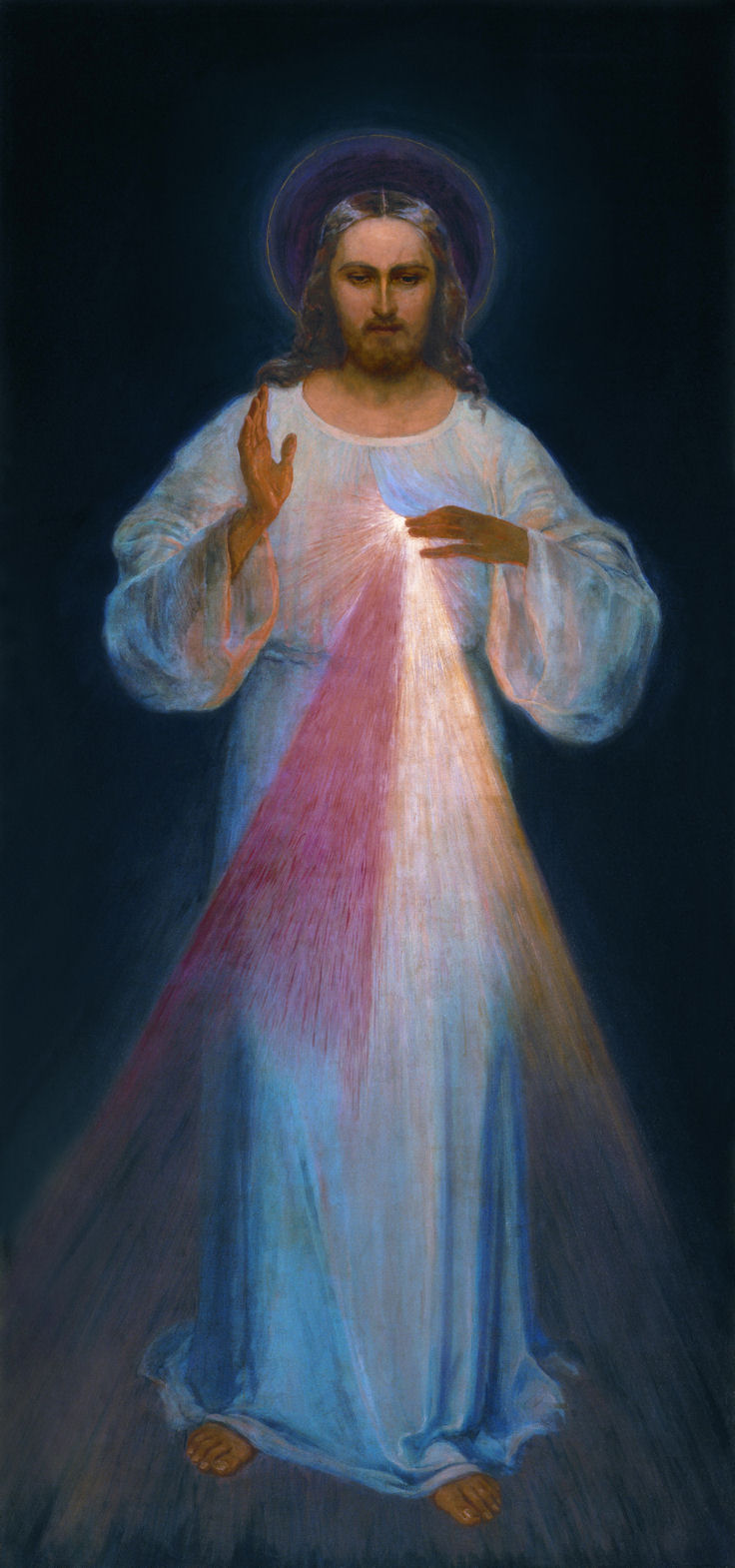 On this day, we contemplate the fullness of the Paschal Mystery – Christ’s Passion, death, and Resurrection. The basis of the whole Easter Mystery is the merciful love of God. From the beginning of creation, throughout Scripture, and most perfectly in the life, Passion, death and Resurrection of His son, Jesus, God has been revealed as love itself. In His infinite love for us, God desires nothing more than to forgive our sins and offer us Mercy.
We can celebrate this “Mercy Sunday” by going to Confession (preferably before that Sunday) and by receiving Communion on that day. We can honor the mercy of the Lord by venerating the Image of The Divine Mercy, and by our prayers and works of mercy.
Join us at any one of our parishes in the ADW area for Mass on this Feast day. Please contact the parish directly to confirm Mass times and more detailed information.
The Basilica of the Nations Shrine of the Immaculate Conception will have Mass for Divine Mercy Sunday. All are welcome.
USCCB’S READING USCCB’S RESOURCES action guide PARISH & MASS TIME FINDER
Origin of Divine Mercy Sunday
Saint Faustina: Mankind’s need for the message of Divine Mercy took on dire urgency in the 20th Century, when civilization began to experience an “eclipse of the sense of God” and, therefore to lose the understanding of the sanctity and inherent dignity of human life. In the 1930s, Jesus chose a humble Polish nun, St. Maria Faustina Kowalska, to receive private revelations concerning Divine Mercy that were recorded in her Diary. St. John Paul II explains:
This was precisely the time when those ideologies of evil, nazism and communism, were taking shape. Sister Faustina became the herald of the one message capable of off-setting the evil of those ideologies, that fact that God is mercy—the truth of the merciful Christ. And for this reason, when I was called to the See of Peter, I felt impelled to pass on those experiences of a fellow Pole that deserve a place in the treasury of the universal Church.
—Pope Saint John Paul II, Memory and Identity (2005)
Divine Mercy Sunday: St. Faustina’s Diary records 14 occasions when Jesus requested that a Feast of Mercy (Divine Mercy Sunday) be observed, for example:
My daughter, tell the whole world about My inconceivable mercy. I desire that the Feast of Mercy be a refuge and shelter for all souls, and especially for poor sinners. On that day the very depths of My tender mercy are open. I pour out a whole ocean of graces upon those souls who approach the Fount of My mercy. The soul that will go to Confession and receive Holy Communion shall obtain complete forgiveness of sins and punishment. … Let no soul fear to draw near to Me. … It is My desire that it be solemnly celebrated on the first Sunday after Easter. Mankind will not have peace until it turns to the Fount of My Mercy.
—St. Faustina, Diary, no. 699
On May 5, 2000, five days after the canonization of St. Faustina, the Vatican decreed that the Second Sunday of Easter would henceforth be known as Divine Mercy Sunday.
The Story of Doubting Thomas
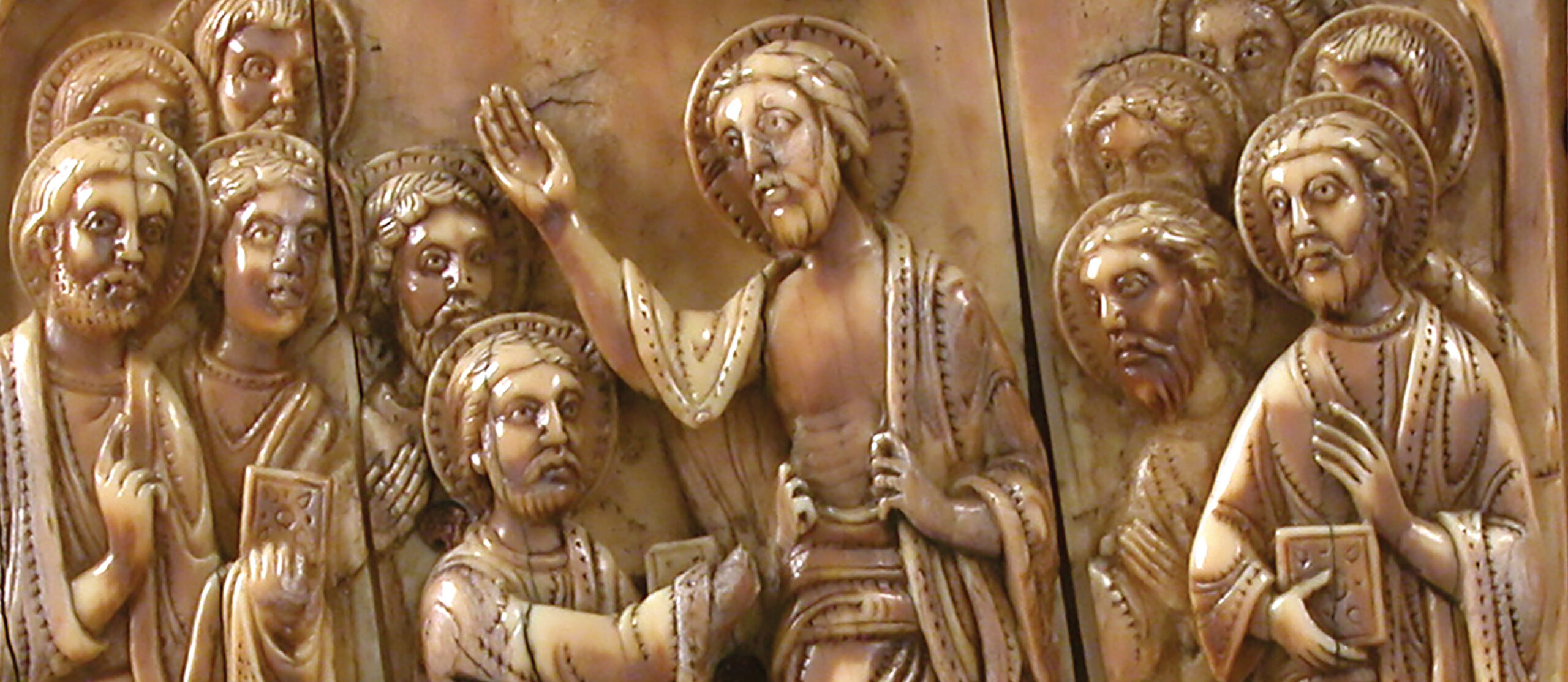
John Chapter 20 – Courtesy of the USCCB.
Thomas.
Thomas, called Didymus, one of the Twelve, was not with them when Jesus came.
So the other disciples said to him, “We have seen the Lord.” But he said to them, “Unless I see the mark of the nails in his hands and put my finger into the nailmarks and put my hand into his side, I will not believe.”
Now a week later his disciples were again inside and Thomas was with them. Jesus came, although the doors were locked, and stood in their midst and said, “Peace be with you.”
Then he said to Thomas, “Put your finger here and see my hands, and bring your hand and put it into my side, and do not be unbelieving, but believe.”
Thomas answered and said to him, “My Lord and my God!”
Jesus said to him, “Have you come to believe because you have seen me? Blessed are those who have not seen and have believed.”
Conclusion.
Now Jesus did many other signs in the presence of [his] disciples that are not written in this book.
But these are written that you may [come to] believe that Jesus is the Messiah, the Son of God, and that through this belief you may have life in his name.
Respectlife.org offers action guides in English and Spanish.
Domingo de la Divina Misericordia
El Domingo de la Divina Misericordia se celebra el domingo siguiente a la Pascua, que es el último día de la Octava de Pascua.
En este día, contemplamos la plenitud del Misterio Pascual: la Pasión, muerte y Resurrección de Cristo. El fundamento de todo el Misterio Pascual es el amor misericordioso de Dios. Desde el comienzo de la creación, a lo largo de toda la Escritura y, de manera más perfecta, en la vida, Pasión, muerte y Resurrección de su Hijo, Jesús, Dios se ha revelado como el Amor mismo. En su amor infinito por nosotros, Dios no desea otra cosa que perdonar nuestros pecados y ofrecernos su misericordia.
Podemos celebrar este Domingo de la Divina Misericordia» acudiendo a la Confesión (preferiblemente antes de ese domingo) y recibiendo la Comunión en ese día. Podemos honrar la misericordia del Señor venerando la Imagen de la Divina Misericordia, así como mediante nuestras oraciones y obras de misericordia.
Únase a nosotros en cualquiera de nuestras parroquias en el área de la ADW para asistir a Misa en esta festividad. Por favor, comuníquese directamente con la parroquia para confirmar los horarios de las Misas y obtener información más detallada.
La Basílica del Santuario Nacional de la Inmaculada Concepción celebrará la Misa del Domingo de la Divina Misericordia. Todos son bienvenidos.
LECTURA DE LA USCCB RECURSOS DE LA USCCB ACTION GUIDE
Buscador de parroquias y horarios de misas
Origen del Domingo de la Divina Misericordia
Santa Faustina: La necesidad de la humanidad del mensaje de la Divina Misericordia adquirió una urgencia extrema en el siglo XX, cuando la civilización comenzó a experimentar un «eclipse del sentido de Dios» y, por consiguiente, a perder la comprensión de la santidad y la dignidad inherente de la vida humana. En la década de 1930, Jesús eligió a una humilde religiosa polaca, Santa María Faustina Kowalska, para recibir revelaciones privadas concernientes a la Divina Misericordia, las cuales fueron registradas en su *Diario*. San Juan Pablo II explica:
Fue precisamente en ese tiempo cuando aquellas ideologías del mal —el nazismo y el comunismo— estaban tomando forma. La hermana Faustina se convirtió en la heralda del único mensaje capaz de contrarrestar el mal de dichas ideologías: el hecho de que Dios es misericordia; la verdad del Cristo misericordioso. Y por esta razón, cuando fui llamado a la Sede de Pedro, me sentí impulsado a transmitir aquellas experiencias de una compatriota polaca que merecen un lugar en el tesoro de la Iglesia universal.
—Papa San Juan Pablo II, *Memoria e identidad* (2005)
Domingo de la Divina Misericordia: El *Diario* de Santa Faustina registra 14 ocasiones en las que Jesús solicitó que se celebrara una Fiesta de la Misericordia (el Domingo de la Divina Misericordia); por ejemplo:
Hija Mía, habla al mundo entero de Mi inconcebible misericordia. Deseo que la Fiesta de la Misericordia sea un refugio y amparo para todas las almas, y especialmente para los pobres pecadores. En ese día se abren las profundidades mismas de Mi tierna misericordia. Derramo todo un océano de gracias sobre aquellas almas que se acercan a la Fuente de Mi misericordia. El alma que acuda a la Confesión y reciba la Santa Comunión obtendrá el perdón total de sus pecados y de las penas debidas por ellos… Que ninguna alma tema acercarse a Mí… Es Mi deseo que se celebre solemnemente el primer domingo después de la Pascua. La humanidad no hallará la paz hasta que se vuelva hacia la Fuente de Mi Misericordia.
—Santa Faustina, *Diario*, n.º 699
El 5 de mayo de 2000, cinco días después de la canonización de Santa Faustina, el Vaticano decretó que el Segundo Domingo de Pascua sería conocido, de ahí en adelante, como el Domingo de la Divina Misericordia.
La historia de Tomás el incrédulo
Juan, Capítulo 20 – Cortesía de la USCCB.
Tomás
Tomás, llamado Dídimo, uno de los Doce, no estaba con ellos cuando llegó Jesús.
Así que los otros discípulos le dijeron: “Hemos visto al Señor”. Pero él les dijo: “Si no veo la marca de los clavos en sus manos, y meto mi dedo en las marcas de los clavos, y meto mi mano en su costado, no creeré”.
Ahora bien, una semana después, sus discípulos estaban de nuevo dentro y Tomás estaba con ellos. Llegó Jesús —aunque las puertas estaban cerradas con llave—, se puso en medio de ellos y dijo: “La paz sea con ustedes.”
Luego le dijo a Tomás: «Pon tu dedo aquí y mira mis manos; trae tu mano y métela en mi costado; y no seas incrédulo, sino cree.”
Tomás respondió y le dijo: “¡Señor mío y Dios mío!”
Jesús le dijo: “¿Has llegado a creer porque me has visto? Bienaventurados los que no han visto y han creído.”
Conclusión
Jesús realizó muchos otros signos en presencia de [sus] discípulos que no están escritos en este libro.
Pero estos han sido escritos para que ustedes [lleguen a] creer que Jesús es el Mesías, el Hijo de Dios, y para que, mediante esta creencia, tengan vida en su nombre.